

The bell above the shop door rang eleven times that year. Edmund Voss counted every one of them, though he never told anyone why.
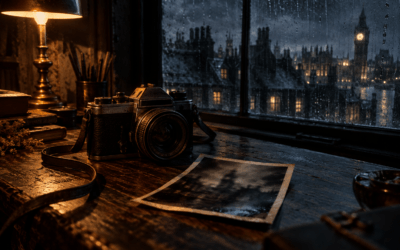
His shop sat on a narrow street in Whitby. The sign above the window read VOSS ANTIQUITIES in faded gold letters. Tourists sometimes wandered in looking for cheap souvenirs. They never stayed long. Something about the place made their skin prickle, though they could never say what.
He had been buying “cursed” objects for eleven years now. He brought things from grieving families, a wedding ring from a marriage that ended in a car crash, a child’s shoe from a house fire, a pocket watch that stopped the exact minute its owner died. He paid fair prices, sometimes more than fair, and he locked each item away in the back room behind a door with three separate locks. Ninety-eight objects sat back there now, wrapped in cloth, resting on shelves that Edmund had built himself.
He had never counted them out loud. But some part of him always knew the number, the way you know how many steps lead up to your own front door.
His assistant, Emiko Sato, had worked for him for two years. She was twenty-four, sharp-eyed, and had grown up in a small town outside Kyoto with her grandmother. Emiko believed in spirits. She had grown up around them, in a quiet, ordinary way, the way some people grow up around dogs or gardens. She did not scare easily. But she scared easily around Edmund’s back room.
Margaret Hargrove came into the shop on a wet Tuesday in October, carrying a small wooden box wrapped in a tea towel. She was eighty-one years old, with a soft, worried face and hands that trembled slightly when she set the box on the counter.
“It was my husband Arthur’s,” she said.
Edmund unwrapped the box carefully. It was a music box, old, the wood dark with age, a small brass key sticking out of one side. He turned the key and a thin, sweet melody came out, slightly warped, like a voice remembering a song it used to know better.
“He started acting strange right after he wound this thing up one night,” Margaret said. “Talking to it. Then two days later, he just… stopped. Doctors call it a coma but they don’t know why. I can’t have it in the house anymore. I can’t.”
Edmund paid her three hundred pounds and carried the box to the back room himself.
That was the first night it spoke to him.
He was locking the third bolt when he heard it — not through his ears exactly, but somewhere behind his ears, warm and clear.
_Edmund. You’ve done so well. Ninety-nine. Do you know what that means?_
The voice told him things over the following nights. That he had died eleven years ago — a car went off the cliff road near Sandsend, and he never made it out of the water. That the fog in his memory wasn’t fog at all, but the simple truth that dead men don’t remember much of anything. That he’d been walking around Whitby for over a decade as something that wasn’t quite a ghost and wasn’t quite a man, and that every single object in his back room held a soul trapped exactly the way he was trapped.
_Ninety-nine souls, Edmund. And you are the hundredth. The last piece. The key that opens every lock at once._
It told him how to free them. Burn the objects. Burn himself with them. One fire, one release, all the souls let loose into whatever came after.
_You’ve been so tired for so long,_ the voice said, softer than anything he’d heard in years. _Don’t you want to rest?_
Next morning, Emiko noticed the change first in his eyes, then in the way he started sorting the back room shelves like a man packing for a trip. When she asked what was wrong, he told her everything the voice, the fire, the freedom waiting for him and ninety-eight strangers he’d never met.
She didn’t laugh at him. She sat him down at the counter and held his hands, which had gone cold and papery, like something already halfway out of this world.
“Edmund, I’ve grown up around spirits my whole life,” she said. “My grandmother talked to them. I’ve felt them in old houses, in shrines, in the quiet parts of forests. And I’m telling you, none of them have ever sounded like that. Real spirits don’t beg. They don’t comfort you right before asking you to die. They’re confused, or angry, or sad never _warm_. Never eager. Something that wants you dead that badly is not your friend.”
Edmund looked at her for a long moment, and for one second, something like doubt crossed his face.
Then the fog came back, thicker than before, and the doubt drowned in it.
“I have to,” he said. “You don’t understand what it’s like. Eleven years of nothing. Eleven years of not even knowing I was a ghost. I want it to end, Emiko. I want to actually end.”
She grabbed his sleeve as he stood. He gently pulled away, and something in his calm, tired smile told her that no argument on earth would stop him tonight.
He poured the oil himself. He lit the match himself. And when the fire caught, he did not step back.
He felt no pain, only warmth, spreading and rising, and beneath the roar of the flames he heard something he hadn’t expected: not ninety-eight voices sighing in relief, not peace, but a single voice, low and satisfied, laughing softly from inside the music box as its wood finally split open in the heat.
Thank you, it said, and the thought wasn’t gentle anymore. Ninety-eight souls, and one living ghost’s death, freely given. That was the price for my freedom.
Too late, Edmund understood. The ninety-eight objects had never held trapped souls waiting to be released. They had been chains, wound tighter around one thing for many years.
The fire burned through the night. By morning there was nothing left but ash and a small, scorched shape that might once have been a music box, its lid open.