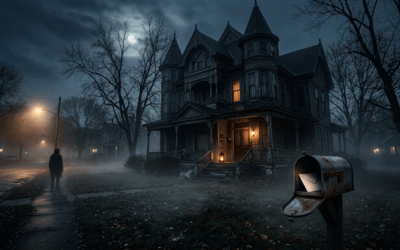

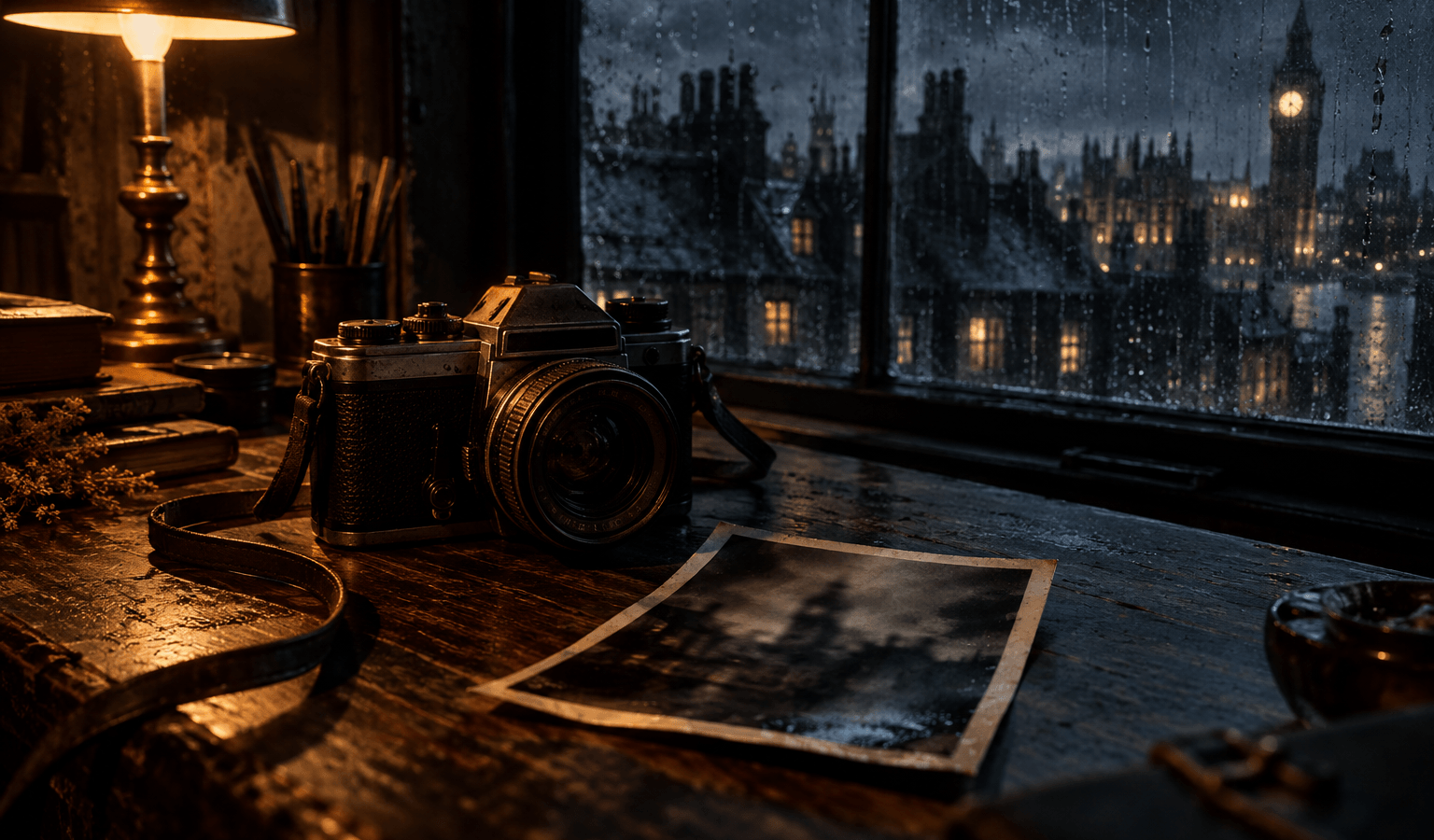
The camera was cold when Daniel picked it up, colder than the rainy London morning around it. He did not know why he touched it first. There were other things on the table – old watches, broken radios, dusty books. But his hand went straight to the camera, like something pulled it there.
“That one’s strange,” said the old man selling it. He was sitting behind the stall at Camden Market, wrapped in a heavy coat even though it was only October. “Nobody buys it. But nobody leaves it either. People pick it up, look at it, then put it down fast. Like it’s hot.”
Daniel laughed. “It’s just a camera.”
“Maybe,” the old man said. He did not smile. “Ten pounds. Take it or leave it.”
Daniel took it.
He was twenty-six, a freelance photographer who took pictures of weddings and birthdays to pay rent, but who dreamed of something bigger. Something real. He thought this old camera, with its scratched black body and heavy lens, might give his photos a different feel. Vintage. Honest. He did not think about the old man’s warning again until three days later.
That night, in his small flat near Camden, he loaded the camera with film he found in a nearby shop – old film, the kind hardly anyone used anymore. He took a photo of his kitchen table, just to test it. Nothing special. A cup of tea, a half-eaten sandwich, his phone lying flat.
He forgot about the film roll for a full day.
When he finally got it developed at a small shop on Chalk Farm Road, the man behind the counter looked at him strange.
“Everything alright, mate?” the man asked, handing him the photo.
Daniel looked down at it.
The photo showed his kitchen table. But it was not the same as before. The cup of tea was broken, lying in pieces. The sandwich was gone. And his phone had a long crack across the screen, like it had been dropped hard.
That evening, without thinking much of it, he knocked his tea cup off the table by accident while reaching for his charger. It shattered on the floor. He froze, staring at the broken pieces, his heart beating fast. Then he remembered the sandwich – he had eaten it for lunch, thrown the bag away. And his phone, still safe in his pocket, unbroken.
He told himself it was coincidence. A weird accident. Nothing more.
But two days later, his phone slipped from his hand on the stairs outside his building. It hit the concrete step and cracked, exactly the same way the photo had shown.
That was when the fear started, small and quiet, sitting in his chest like a stone.
Daniel had a friend named Jake, an American who had moved to London for work and stayed because he liked the pubs more than his job. Jake was loud, funny, and did not believe in anything he could not touch.
“You’re telling me,” Jake said, laughing over his pint at a pub near King’s Cross, “that some old camera shows the future?”
“Not the future exactly,” Daniel said. “Twenty-four hours ahead. Exactly twenty-four hours.”
“Prove it.”
So Daniel did. He took a photo of Jake standing outside the pub. The next day, he waited, watching the clock.
Twenty-four hours later, almost to the minute, Jake tripped on the same spot outside the pub and spilled his drink all over his jacket – exactly like the photo had shown, down to the surprised look on his face and the dark stain spreading across his sleeve.
Jake stopped laughing after that.
“Delete it,” Jake said quietly, staring at the photograph in Daniel’s hand. “Get rid of that thing.”
But Daniel could not. He was a photographer. And this was the biggest discovery of his life. He began testing it more – small things at first, harmless things. A dropped pen. A missed bus. Every single time, the photo came true, exact and undeniable.
He started to believe he had something powerful in his hands. Something no one else in the world had.
He did not think about what power like that might cost him.
Her name was Emiko. She had moved to London from Osaka two years earlier to study art, and she stayed because London, she said, felt like a city full of stories waiting to be told. Daniel had met her at a gallery opening six months ago, and since then, they had been close – more than friends, though neither of them had said the words out loud yet.
She was the one person who made him feel calm, even when his mind was full of noise.
One rainy afternoon, she visited his flat, worried about him. He had not been sleeping well. He looked thinner, tired, his eyes red from staying up late developing photographs in his makeshift darkroom.
“You need to stop this,” she said, sitting across from him at the kitchen table – the same table from the very first photo. “This camera is doing something to you.”
“It’s just curiosity,” Daniel said. “I want to understand it.”
“Some things,” Emiko said softly, “are not meant to be understood. Some things are meant to be left alone.”
He did not listen. Instead, later that evening, while she was making tea in his small kitchen, humming quietly to herself, he lifted the camera and took her picture. He told himself it was harmless. He told himself he only wanted a photo of her, something normal, something warm, to prove the camera could show good things too, not just accidents and broken cups.
He did not tell her he took it.
The next morning, he developed the film alone in his darkroom, his hands trembling slightly as the image slowly appeared in the chemical tray, the way it always did – shapes first, then details, then the full picture rising out of the white paper like a ghost stepping out of fog.
He dropped the photo when he saw it.
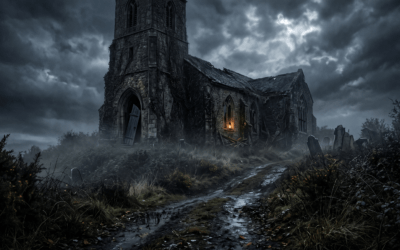
It showed Emiko standing in a graveyard, wearing black, her face pale and wet with tears. Behind her stood a grey stone with fresh flowers laid against it. He picked the photo back up with shaking fingers and looked closer, his breath catching in his throat.
He could read the name carved into the stone.
It was hers.
Emiko Tanaka.
Daniel did not sleep that night. He sat in his flat with all the lights on, staring at the photo, his mind racing through every terrible possibility. An accident. An illness. Something he could stop if only he knew what it was.
He called Emiko at midnight, his voice shaking.
“You need to stay inside tomorrow,” he said. “Please. Don’t go anywhere. Don’t take any risks. Just stay home, all day, I’m begging you.”
“Daniel, you’re scaring me,” she said. “What’s wrong?”
He could not tell her the truth. It sounded insane even inside his own head. So he just repeated himself, again and again, until she finally agreed, confused and worried, and hung up the phone.
The next day passed slowly, painfully slow, every minute stretching longer than the one before it. Daniel stayed in his flat too, pacing, checking his own front door was locked, jumping at every small sound from the street outside. He did not eat. He barely breathed.
Twenty-four hours came and went.
Nothing happened. Emiko was fine.
He should have felt relief. Instead, something cold settled in his stomach, a feeling he could not explain. The camera had never been wrong before. Not once. Not with the cup, not with the phone, not with Jake’s spilled drink.
So why was it wrong now?
Unless it was not wrong at all.
Unless he had simply misunderstood what it was showing him.
He looked at the photo again, really looked at it this time, the way he should have from the very beginning. Emiko was standing beside the grave, yes. But she was not looking at the camera. She was looking down, at the stone, her hand resting gently on top of it, the way someone touches something they miss deeply.
She was not the one who had died.
She was the one left behind.
Daniel’s hands went cold. He grabbed his coat and ran, out into the wet London streets, toward the small shop on Chalk Farm Road, toward the man who sold the film, the only person who might know something about the camera’s history. But when he reached the shop, it was closed, dark inside, a faded sign in the window that read Closed for years – though he was certain he had been inside it just days before.
He ran back to the flea market next, desperate to find the old man who had sold him the camera. The stall was gone. In its place stood a different seller, an elderly woman selling scarves, who looked at him strangely when he described the man in the heavy coat.
“No one like that here,” she said. “Not in the ten years I’ve had this spot.”
Daniel walked home slowly through the rain, the camera heavy in his bag, heavier than it had ever felt before. He understood now, with a clarity that made his knees weak. The camera did not show the future of the person standing in front of it. It showed the last memory of whoever was holding it, taken and kept exactly twenty-four hours before they died – a final photograph, developed only after the photographer was already gone, showing the very last thing they had ever seen through the lens.
He had photographed Emiko because he loved her. Because he wanted one more beautiful memory before whatever came next.
The camera had understood him perfectly.
That night, Daniel sat at his kitchen table and wrote a short letter to Emiko, telling her everything – the camera, the photographs, the truth he now understood too late to change. He placed the letter beside the photograph, the one of her standing in the graveyard, and set the old camera down next to both of them.
Outside, the London rain kept falling, tapping softly against his window, counting down the hours he did not have left.