
The Keeper of Gray Rock
This captive dark romance story is for adult readers only. Content warning: kidnapping, captivity, coercion, non-consent, violence, and obsessive love.
The man who took me never once raised his voice. That was the worst part. A screaming man, I could have hated cleanly. But Rowan Hale spoke to me the way you speak to a scared animal. Low. Patient. Like he had all the time in the world.
He did. I had thirty days.
The Parking Lot
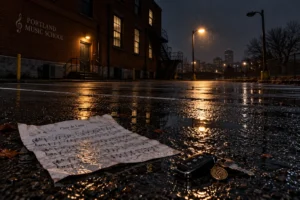
It happened on a Tuesday in November. I was twenty-seven. I had just finished my last piano lesson of the night in Portland, Maine. A little boy named Sam had played “Ode to Joy” with only two mistakes, and I was smiling when I walked to my car.
The parking lot behind the music school was dark. One light was broken. I remember thinking I should tell someone about it.
I had my keys in my hand. I heard a step behind me. Before I could turn, a hand closed over my mouth. It smelled of salt and cold rope.
“Don’t fight,” a man said into my ear. “You’ll only hurt yourself.”
I fought anyway. I kicked. I bit his glove. Then something sharp went into my neck, and the world tipped sideways like a boat in a storm.
The Island
I woke up in a bed that wasn’t mine.
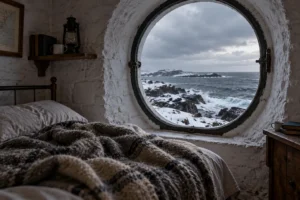
The room was small and white. The walls were thick stone. Through a round window, I saw nothing but gray water and gray sky. The wind howled around the building like it wanted to get in.
My shoes were gone. My phone was gone. My coat was gone.
He was sitting in a wooden chair by the door. He was tall, with short dark hair and a jaw covered in stubble. He looked about thirty-five. His eyes were pale, almost silver, and they did not move from my face.
“Where am I?” My voice came out cracked.
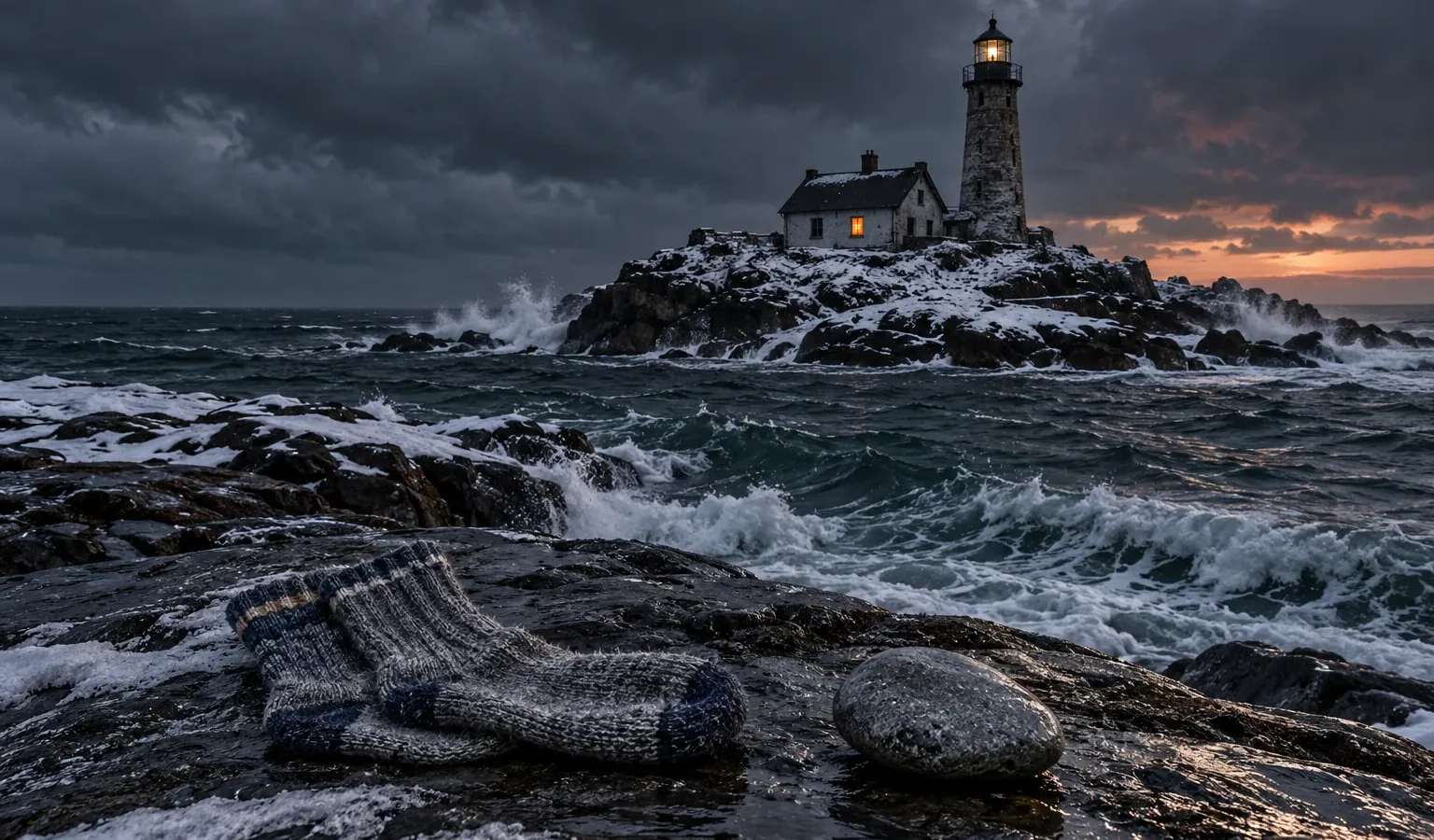
“Gray Rock Island,” he said. “Eleven miles off the coast. There’s a lighthouse, this house, and me. No ferry. No neighbors. In winter, even the fishermen stay away.”
“Who are you?”
“Rowan.”
“What do you want?”
He leaned forward and rested his arms on his knees. “Not you, Nora. Don’t flatter yourself. I want your father.”
My stomach turned cold.
My father is Daniel Bell. If you live in New England, you have seen his name on hospitals, office towers, and the side of the hockey arena. He is rich in the way that makes rules bend around him.
“If it’s money,” I started.
“It’s not money.” Rowan stood up. “Ten years ago, your father drove home drunk from a party. He hit a girl on a bike. She was nineteen. He didn’t stop. He drove home, parked in his garage, and went to bed.”
I shook my head. “That’s not true.”
“Her name was Lily Hale.” He said it slowly, like each word cost him. “She was my sister. She lived for three days. The police found paint from his car on her bike. Then the paint report went missing. The witness changed his story. The case went away.”
“My father would never…”
“Your father sent you to music camp in Switzerland that summer,” Rowan said. “Do you remember? You were seventeen. He wanted you far away while he cleaned up.”
I did remember. I remembered being surprised. My father had never cared about my music before.
Rowan walked to the door. “I’ve sent him a message. He has thirty days to go on camera and tell the truth. Every word. If he does, you go home.”
“And if he doesn’t?”
He looked back at me. For the first time, something moved in those pale eyes. I couldn’t tell if it was pity or hunger.
“Then you’ll find out what I’m willing to do,” he said. And he locked the door behind him.
The Rules
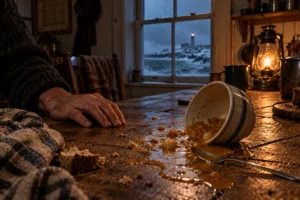
He had rules. He told them to me on the second day, while I sat at the kitchen table refusing to eat.
You don’t get shoes. The rocks are sharp and the snow is deep. Without shoes, you won’t get far.
You don’t touch the radio in the lighthouse.
You don’t lie to me.
“And what do I get?” I asked.
“You get to live.” He pushed the bowl of soup closer to me. “Eat.”
I threw it at him.
He didn’t flinch. Hot soup ran down his shirt. He looked at it, then at me. Then he walked around the table, took my jaw in one hand, and tilted my face up until I had to look at him.
“I can make this easy, or I can make it long,” he said quietly. “Your father already chose what kind of man to be. You still get to choose what kind of woman.”
His thumb rested just under my lip. He held it there one second too long. Then he let me go.
That night, I didn’t sleep. I kept feeling the place where his thumb had been.
The Boat
On day nine, I found the boat.
It was a small metal skiff, tied under a tarp behind the old boathouse. There was gas in the tank. I waited until Rowan climbed the lighthouse to check the lamp. Then I ran across the frozen rocks in my bare feet.
They bled. I didn’t care.
I pushed the boat into the water. I pulled the cord once, twice, three times. The engine coughed and roared. I was laughing and crying at the same time as the island started to shrink behind me.
Then the first big wave hit.
The skiff tipped. The second wave came over the side and filled the boat with water so cold it felt like knives. The engine died. The third wave threw me into the sea.
I remember the cold most of all. It squeezed my chest until I couldn’t breathe. My arms stopped working. I went under, and the gray water closed over my head, and I thought, this is how it ends.
A hand grabbed my hair.
Rowan dragged me out of the water and onto the rocks. He carried me to the house and kicked the door open so hard it cracked. He pulled off my wet clothes with fast, rough hands. I was shaking too hard to stop him.
Then he pulled off his own shirt, wrapped us both in every blanket in the house, and held me against his bare chest in front of the fire.
“Breathe,” he said. “Breathe, damn you.”
His heart was pounding. I could feel it against my back. His arms were locked around me so tight it almost hurt.
“You could have let me drown,” I whispered. “Your problem would be over.”
“No.” His voice was rough. “You don’t get to leave like that. You don’t get to leave at all.”
I should have been afraid of those words. I was. But I was also warm for the first time in nine days, and I fell asleep in the arms of the man who had stolen my life.
When I woke, he was gone. On the chair beside the bed was a pair of thick wool socks. Still no shoes. Just socks.
I cried harder over those socks than over anything else.
The Piano
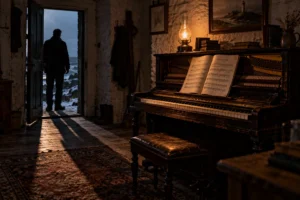
There was an old piano in the front room. It was out of tune, and two keys didn’t work at all. On day fourteen, out of boredom and loneliness, I started to play.
I played Chopin. I played the slow songs my mother loved. I played until my fingers ached.
When I turned around, Rowan was standing in the doorway. He had been there a long time. I could tell from the way he held his body, very still, like moving might break something.
“Lily played,” he said. “Badly. She only knew one song. She played it every Christmas.”
“Which song?”
He didn’t answer. But the next night, there was a set of tuning tools on top of the piano, and a book about how to use them.
After that, he came to listen every night. He never sat. He always stood in the doorway, arms crossed, eyes on my hands. I started to play for him without meaning to. I started to wait for him to come.
I hated myself for that. I told myself it was survival. Women in my position learn to please the person who holds the key.
But at night, alone in the stone room, I thought about his heartbeat against my back. And I could not make myself believe it was only survival.
The Bargain
By day twenty, my father had not answered.
Rowan sent him videos. Me at the window. Me at the piano. Me holding a newspaper with the date on it. He showed me each one before he sent it. My father did not reply to a single one.
“He’s probably working with the police,” I said. “He’s probably trying to find me.”
“He’s not.” Rowan’s voice was flat. “If the police were looking, I would know.”
“Let me call him.” I stood in front of him. “Let me talk to him. Let me talk to my mom. Please.”
He was quiet for a long time. Then he said, “Everything here has a price, Nora.”
“What price?”
He didn’t say it. He didn’t have to. He just looked at me, and the air between us went tight and hot, like the moment before lightning.
“Tonight,” he said. “You come to my room. You stay until morning. Then you get your call.”
I should have said no. I told myself I had no choice, and that was true. It was also true that I had been thinking about him in the dark for twenty nights.
I don’t know which truth was stronger. I still don’t.
I went to his room. The door closed behind me. What happened there was not love. It was not kind. He took what he had bought, and I paid it. Somewhere in the middle of it, I stopped knowing where my fear ended and my wanting began.
In the morning, I scrubbed my skin in the cold shower until it was red. I couldn’t wash it off. I couldn’t wash off the way he had said my name at the end, broken, like a prayer he didn’t believe in.
He was sitting at the kitchen table when I came out. He looked like he hadn’t slept at all. He wouldn’t meet my eyes. He slid a phone across the table.
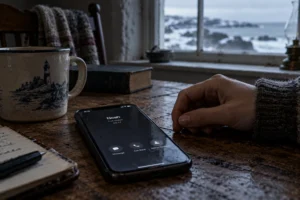
“One call,” he said. “Speaker on.”